1. Pierre needed to give a demonstration of the Earth's yearly rotation around the sun. He was given a pencil, styrofoam ball, and a flashlight. Which graphic would be the best diagram to use as a model for his demonstration?

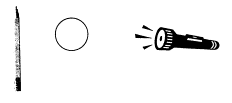
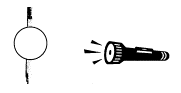
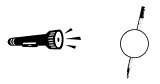
2. The moon revolves around Earth in a similar manner as
The Voyager space probe revolves through our solar system
random asteroids revolve through space
our Earth revolves around our sun
a comet revolves around our sun
3. Aldo placed a thermometer upon a black sheet of construction paper. A desk lamp was shining upon it. If the thermometer reads at 72 degrees F in the beginning and then after 10 minutes it raises to 74 degrees F, which of the following graphics would best demonstrate the relationship between the amount of heat absorbed and the angle to the light source?
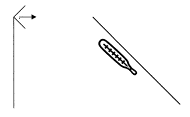
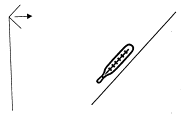
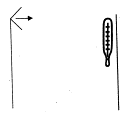
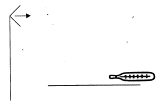
4. Why is it summer in the Southern Hemisphere when it is winter in the Northern Hemisphere? The Southern Hemisphere is
closest to the sun
receiving the most direct rays from the sun
on a path of warm winds from the North
balancing out the temperatures for Earth
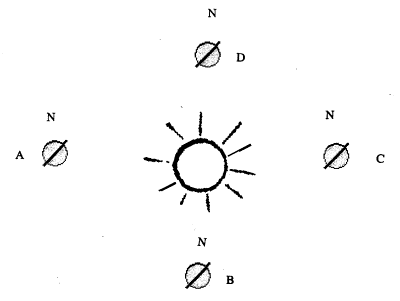
5. Use this diagram of the sun and Earth's path around the sun to answer the question. The "N" indicates North and Earth is traveling from A to B to C and then to D. If "B" is Fall, what season would the northern hemisphere be in at D?
fall
spring
summer
winter
6. Use this diagram of the sun and Earth's path around the sun to answer the question. The "N" indicates North and Earth is traveling from A to B to C and then to D. If "B" is Fall, season would the northern hemisphere be in at C?
winter
spring
summer
fall
7. What season is the northern hemisphere experiencing at this time?
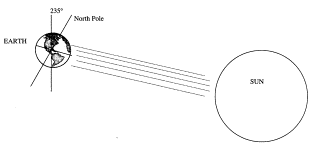
winter
summer
spring
fall
8. If you lived in a city found in South America, what season would you experience?
spring
fall
summer
winter
9. What time of year is the sun farthest from Earth?
in our summer
in our winter
in our spring
in our fall
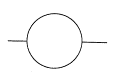
10. Which of the following shows the angle of Earth's axis relative to the sun?
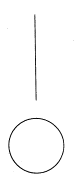
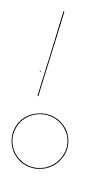
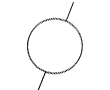
11. What month would Utah have the greatest number of daylight hours per day?
January
June
September
December
12. What month would Utah have the sun's light strike at the lowest angle?
January
June
September
December
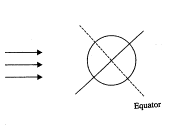
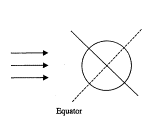
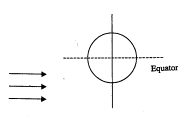
13. How would the Earth change in position for a city in North America to experience Spring or Fall?
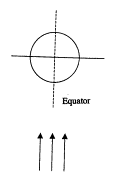
14. Why does the air temperature rise in the summer?
We are closer to the sun
The air becomes thicker and denser
The sun's rays are more direct and days are longer
The ration of the hours of daylight to the hours of night is reduced
15. Use this drawing of a light shining on a dark piece of paper to answer the next question. The papers are all the same distance from the light but are angled differently.
Which paper will get the hottest?

A
B
C
None of the above
16. Use this diagram of the sun and Earth's path around the sun to answer the question. The "N" indicates North and Earth is traveling from A to B to C and then to D. At which position will the day and night hours be equal in length?
A and B
B and C
C and D
B and D
17. Using the drawing below, compare the position of the sun in the summer to the position of the sun in the winter. Which statement is true?
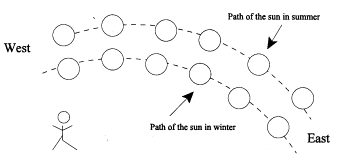
The sun is lower in the sky at noon in the winter than in the summer
There is no difference in the sun's position in any season at noon
The sun is closer to the earth in the summer time than in the winter
The Earth takes longer to rotate in the wintertime than in the summer

